Children's health
NHS Vaccinations for Children: What Parents Actually Need to Know
Published
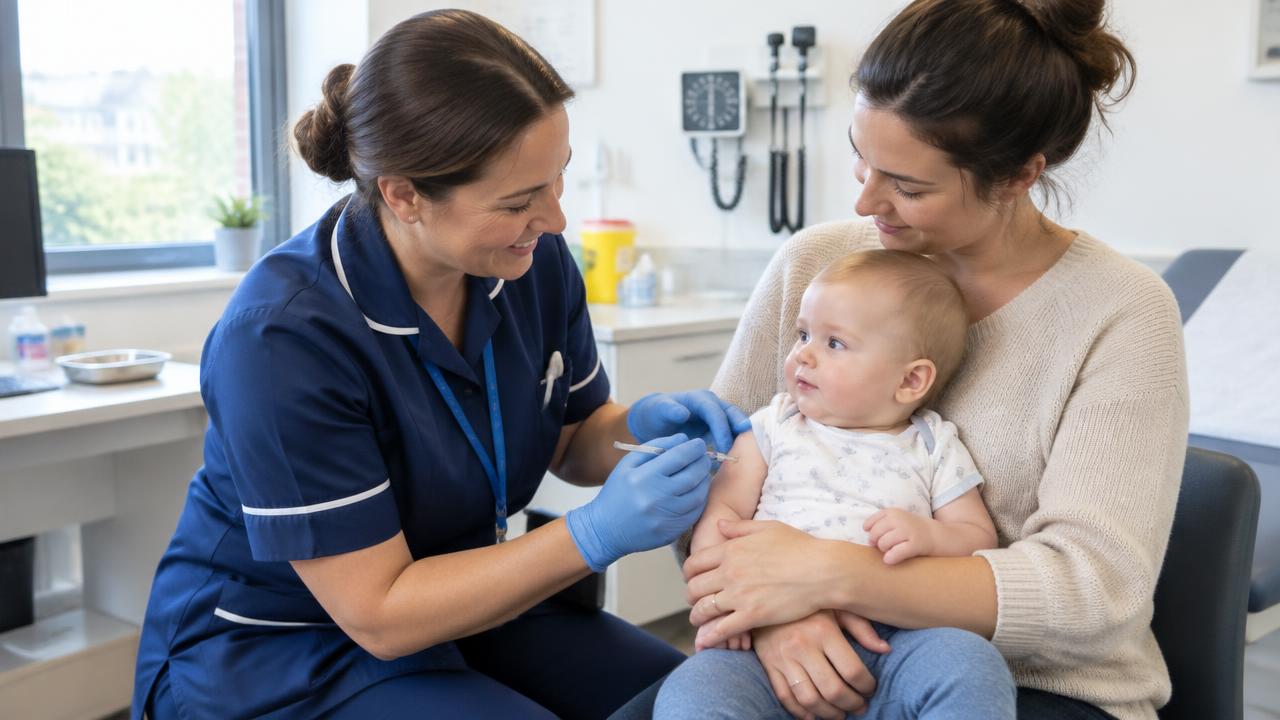
Keeping track of when your child is due their next jab shouldn't require a spreadsheet, but between schedule changes, new vaccines being added, and the general chaos of early parenthood, it's easy to lose track. NHS vaccinations for children currently follow a schedule that changed twice in the past year and a half, most recently in January 2026, so even parents who did their research with an older child may find the current schedule looks a little different this time round.
Register or Contact Us Online →
The Current NHS Vaccination Schedule, Explained Simply
As of January 2026, the routine childhood immunisation schedule in England runs to six main appointments rather than the five most parents grew up with. Here's what that actually looks like for children born on or after 1 July 2024:
| Age | Vaccines Given |
|---|---|
| 8 weeks | 6-in-1 vaccine (1st dose), Rotavirus (1st dose), MenB (1st dose) |
| 12 weeks | 6-in-1 vaccine (2nd dose), Rotavirus (2nd dose), MenB (2nd dose) |
| 16 weeks | 6-in-1 vaccine (3rd dose), Pneumococcal vaccine (1st dose) |
| 1 year | MMRV vaccine (1st dose), Pneumococcal (2nd dose), MenB (3rd dose) |
| 18 months (new appointment) | 6-in-1 vaccine (4th dose), MMRV (2nd dose) |
| 3 years 4 months | 4-in-1 pre-school booster |
The 18-month appointment is genuinely new, introduced specifically to spread out the number of injections given at any single visit. The other significant change is the MMRV vaccine, which now protects against measles, mumps, rubella, and chickenpox in one combined dose, replacing the separate MMR vaccine for children born on or after 1 January 2025.
Why the 6-in-1 Vaccine Needs Three Separate Doses
A question that comes up often: why does a baby need the same vaccine three times rather than once? The 6-in-1 vaccine protects against diphtheria, tetanus, whooping cough, polio, Hib, and hepatitis B, and building strong, lasting immunity against six separate diseases genuinely requires multiple doses spaced a specific number of weeks apart. Skipping or significantly delaying a dose doesn't just delay protection, it can mean needing to restart part of the schedule depending on how much time has passed, which is exactly why sticking to the recommended timing matters more than it might seem for a seemingly minor scheduling gap.
Book Your Child's Vaccination Appointment →
What People Searching for a Child Vaccination Clinic Actually Need
A lot of parents searching for a child vaccination clinic are really looking for straightforward answers to a few practical questions: when is my child due their next vaccine, how do I actually book it, and will it hurt them. On that first point, GP practices deliver routine childhood immunisations as part of general nursing care rather than through a separately branded clinic, which means booking works the same way as any other nursing appointment rather than needing a special referral. On the second point, most practices now handle this through an online request system, and on the third, most children experience nothing worse than brief discomfort at the injection site, with genuine serious reactions being rare.
Baby Immunisation Near Me: Why Local Access Actually Matters
Searching for baby immunisation near me isn't just about convenience, it reflects something practical: getting vaccines on schedule is considerably easier when the practice is genuinely accessible, not a long journey away with a newborn or toddler in tow. A step-free entrance and accessible consulting rooms matter more than people expect when you're managing a pram, a car seat, and a baby who's about to have an injection, not just a design nicety on a practice's website.
Children's Health Clinic London: What Broader Support Looks Like
Vaccinations are one part of a much wider picture of children's health, and searching for a children's health clinic London parents can rely on ongoing should factor in more than just the immunisation schedule. A properly resourced GP practice provides nursing care covering long-term condition reviews, wound care, and general health advice, alongside GP consultations for acute and ongoing conditions, meaning a child's healthcare doesn't need to be split across multiple different providers for routine versus more complex needs.
What to Actually Bring to a Vaccination Appointment
A little preparation makes the appointment smoother for everyone involved. Bring your child's Red Book (personal health record) if you have one, since it gives the nurse a clear record of what's already been given. If your child has had a reaction to a previous vaccine, mention this directly rather than assuming it's already on file, particularly if you've moved between practices. And it genuinely helps to keep your child calm and distracted during the injection itself, whether that's a favourite toy, a song, or simply holding them securely, since a calmer child generally experiences less discomfort than one who's already anxious before the needle even goes in.
Why Timing Matters More Than People Realise
Vaccines are scheduled at specific ages for a reason tied directly to when a child is actually most vulnerable to a given disease. The 8-week starting point exists because very young babies face the highest risk of serious complications from infections like whooping cough and meningitis, precisely the diseases the earliest vaccines target. Delaying vaccination without a specific medical reason doesn't just push protection back, it extends the window during which your child is vulnerable to diseases that, for infants specifically, can be genuinely dangerous rather than a routine childhood illness.
Why Higham Hill Medical Centre
Higham Hill Medical Centre delivers childhood vaccinations and immunisations as part of a wider nursing care service that also covers long-term condition reviews, cervical screening, and wound care, working alongside GPs, physiotherapists, dietitians, and social prescribers as part of a genuinely multidisciplinary team. In the most recent National GP Patient Survey, 87% of patients rated their experience as good, the highest result among 15 GP practices in Walthamstow, and the practice holds a Good overall rating from the Care Quality Commission. Registration takes around five minutes online, and the practice accepts registrations even from families living outside the immediate local area.
Get in Touch
Higham Hill Medical Centre
📍 258-260 Higham Hill Road, Walthamstow, London, E17 5RQ
📞 020 8527 2677
📧 nelondonicb.highamhill@nhs.net
🕗 Monday to Friday: 8am to 6.30pm
For a life-threatening emergency, call 999. For urgent advice when the practice is closed, call 111 or visit 111.nhs.uk.
Frequently Asked Questions
1. Do I need to book a special appointment for my child's vaccinations, or is it part of a routine visit?
Childhood vaccinations are delivered through the practice's nursing team as part of general nursing care, so you book them the same way as any other nursing appointment, typically through the practice's online request system, rather than needing a separate specialist referral.
2. What's actually new in the 2026 NHS vaccination schedule compared to previous years?
The schedule now includes a new 18-month appointment, introduced to spread out the number of injections given at any single visit, and the MMR vaccine has been replaced by the combined MMRV vaccine, which also protects against chickenpox, for children born on or after 1 January 2025.
3. What if my child missed a scheduled vaccine appointment?
Contact the practice as soon as possible to arrange a catch-up appointment. Missing a dose doesn't necessarily mean starting over, but the appropriate next step depends on which vaccine and how much time has passed, so it's best discussed directly with the nursing team.
4. Is it normal for my child to have a reaction after a vaccination?
Mild reactions like soreness at the injection site, a slight fever, or fussiness for a day or two are common and generally not a cause for concern. If you're worried about a specific reaction, contact the practice or NHS 111 for guidance rather than waiting it out uncertain.
5. Can I register my child at Higham Hill Medical Centre if we live outside Walthamstow?
Yes, the practice accepts registrations from families living outside the local area, though it's worth confirming current arrangements directly when registering, since this can vary.
6. Where can I find more general information about the NHS vaccination schedule?
The NHS website maintains an up-to-date national vaccination schedule, and the practice's nursing team can answer questions specific to your child's individual vaccination history and any catch-up needs.